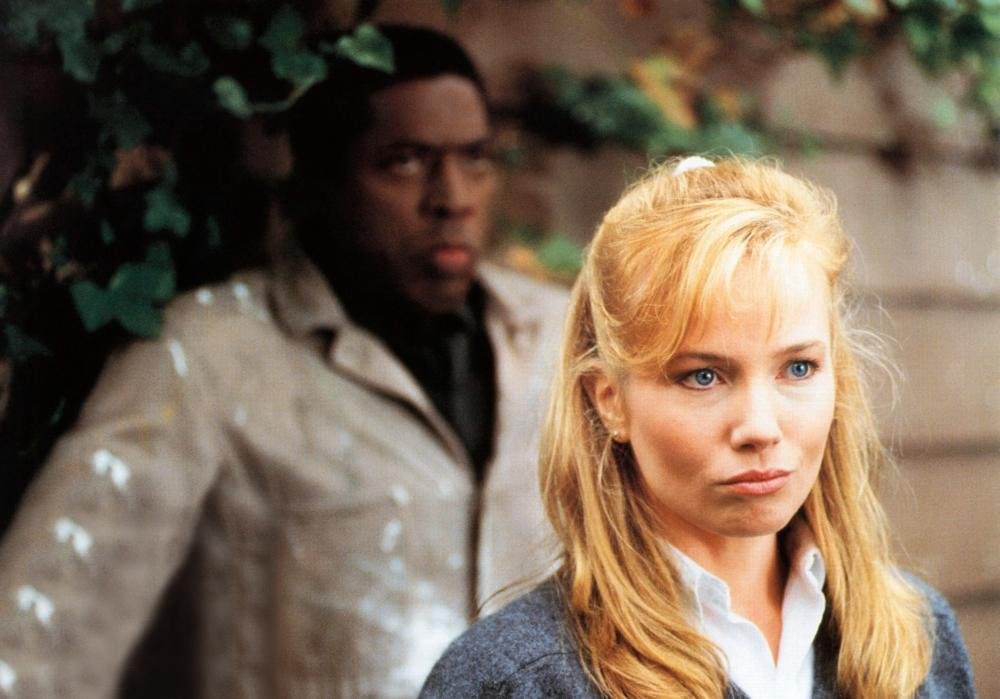
The chilling premise of a trusted caregiver turning into a sinister threat isn't just a horror trope; it's a primal fear expertly tapped by The Hand That Rocks The Cradle. This 1992 psychological thriller left an indelible mark on audiences, crafting a story of domestic terror that felt all too real. But how did the filmmakers orchestrate such a nail-biting experience? Let's pull back the curtain and uncover the behind-the-scenes stories and production facts of The Hand That Rocks The Cradle, delving into the meticulous planning, creative challenges, and surprising successes that brought Peyton Flanders to life.
At a Glance: Crafting a Modern Horror Classic
- Script's Long Journey: Screenwriter Amanda Silver's thesis project took two years and approximately 30 drafts to perfect.
- Filming Location: Principal photography unfolded in the Pacific Northwest, specifically Washington state (Issaquah, Seattle, Tacoma).
- Modest Budget, Massive Returns: The film was made for $11.9 million but grossed a stunning $140 million worldwide.
- A Nanny to Remember: Rebecca De Mornay's portrayal of Peyton Flanders remains iconic and unsettling.
- Critical Buzz: While reviews were mixed, the film garnered a significant cult following and notable accolades.
- Lasting Legacy: Its impact endures, inspiring remakes and solidifying its place in thriller cinema.
The Genesis of Terror: From Film School Thesis to Blockbuster Script
Every great film starts with a compelling story, and for The Hand That Rocks The Cradle, that story began in a film school classroom. The screenplay, a meticulous work of suspense and psychological manipulation, was the brainchild of Amanda Silver. What many don't realize is that this gripping narrative was initially her film school thesis.
Crafting a story that resonated so deeply took time and immense effort. Silver dedicated two years to refining her vision, painstakingly going through approximately thirty drafts. This wasn't just about tweaking dialogue or adjusting plot points; it was about building a robust, layered narrative that ratcheted up the tension with every scene. The dedication paid off, evolving from an academic exercise into a script that caught the attention of Hollywood, laying the foundation for a classic psychological thriller.
Behind the Camera: Curtis Hanson's Steady Hand
Bringing a script as intricate and emotionally charged as The Hand That Rocks The Cradle to the big screen required a director with a keen eye for suspense and a deep understanding of human psychology. That director was Curtis Hanson. Known for his methodical approach and ability to draw out powerful performances, Hanson was tasked with transforming Silver's written words into a cinematic nightmare.
Hanson's direction ensured the film wasn't just a series of shocking moments but a slow, creeping dread. He masterfully built tension, allowing Peyton's insidious manipulations to unfold gradually, making her infiltration of the Bartel family feel terrifyingly plausible. His guidance was crucial in shaping the film's tone, ensuring that the domestic setting, often a place of comfort, became a stage for escalating terror. Hanson's vision ultimately crafted a film that resonated with primal fears, proving that sometimes the scariest monsters are the ones you invite into your home.
Casting the Nightmare: Assembling the Unforgettable Ensemble
A psychological thriller lives or dies by its performances, and The Hand That Rocks The Cradle boasts a cast that truly delivered. The film's ensemble brought to life the terror, vulnerability, and sheer menace required to make the story work.
Annabella Sciorra as Claire Bartel
As the unsuspecting mother, Claire Bartel, Annabella Sciorra anchored the film with a portrayal of relatable vulnerability and growing suspicion. Her journey from trusting homemaker to a woman fighting for her family's survival provided the emotional core, making audiences root for her as Peyton's schemes intensified. Sciorra had to convey both the physical and psychological toll of a woman under siege, a demanding role she executed with compelling authenticity.
Rebecca De Mornay as Peyton Flanders
The heart of the film's terror, however, lies squarely with Rebecca De Mornay's chilling performance as Peyton Flanders. De Mornay embodied the outwardly perfect, inwardly venomous nanny with an unnerving blend of charm and icy malice. Her ability to switch seamlessly between sweet maternal care and calculating cruelty made Peyton one of cinema's most memorable villains.
De Mornay's portrayal also sparked discussion, particularly around the film's depiction of women and sexual assault. Some feminists criticized the film's themes, but De Mornay publicly defended her role and the narrative, arguing for its dramatic merit and the complex character she was playing. Her performance earned her a Saturn Award nomination for Best Actress, a testament to her captivating villainy.
The Supporting Players Who Shined
The film's strength was also in its robust supporting cast:
- Matt McCoy as Michael Bartel: Playing Claire's husband, McCoy brought a sense of normalcy that was gradually eroded by Peyton's manipulations.
- Ernie Hudson as Solomon: Hudson's portrayal of the intellectually disabled handyman Solomon offered a rare beacon of kindness and an eventual hero, making his unjust framing by Peyton all the more heartbreaking.
- Julianne Moore as Marlene Craven: Moore, in an early career role, delivered a nuanced performance as Claire's supportive friend, Marlene. Her character's journey from skeptical confidante to tragic victim added another layer of emotional depth and horror. Moore's memorable turn earned her a Saturn Award nomination for Best Supporting Actress.
- Madeline Zima as Emma Bartel: As the innocent daughter Emma, Zima's performance was crucial in showing Peyton's insidious influence on the children, making Emma's eventual turn against Peyton a pivotal moment.
Together, this cast created a dynamic that felt authentic, amplifying the terror as their characters navigated Peyton's psychological warfare.
Setting the Scene: Pacific Northwest Charm with a Sinister Edge
The backdrop for The Hand That Rocks The Cradle played a crucial role in establishing its unique atmosphere. Rather than a generic suburban setting, director Curtis Hanson opted for the picturesque, often rain-kissed landscapes of Washington state. Principal photography for the film began on April 15, 1991, bringing the production crew to various locations that lent the film a distinct sense of place.
Locations included:
- Issaquah, Washington: A city known for its natural beauty and suburban feel, likely providing many of the quintessential "American family" backdrops.
- Seattle, Washington: The bustling urban center provided specific, identifiable locations. Dr. Victor Mott's residence, for instance, a key site in the film's inciting incident, was filmed at a real Seattle home located at 2502 37th Avenue West. This choice grounded the fictional terror in tangible reality.
- Tacoma, Washington: The Bartel family's seemingly idyllic home, which becomes the stage for Peyton's psychological torment, was filmed at 808 North Yakima Avenue in Tacoma. Using actual residential addresses added to the film's verisimilitude, making the invasion of the Bartel's private sphere feel all the more personal and violating.
The decision to film in the Pacific Northwest provided a striking contrast: the natural beauty and perceived safety of a quiet, affluent suburb against the escalating horror unfolding within its perfectly manicured homes. This juxtaposition amplified the film's themes, proving that even the most picturesque settings can harbor the darkest secrets.
Budgeting for Suspense: An $11.9 Million Gamble
In the world of filmmaking, a production budget is often a tightrope walk, balancing creative vision with financial realities. For The Hand That Rocks The Cradle, the budget was a relatively modest $11.9 million. In early 1990s Hollywood, this positioned it as a mid-range production, far from the tentpole blockbusters but with enough resources to ensure high production values and a capable cast and crew.
Every dollar had to count, from securing the prime Pacific Northwest locations to crafting the elaborate set pieces, such as the infamous booby-trapped greenhouse. The film's success hinged on making every element—the suspense, the character development, the escalating tension—feel premium without a colossal price tag. The careful allocation of these funds allowed Hanson and his team to deliver a polished, high-quality thriller that never felt cheap or rushed.
Box Office Gold: A Sleeper Hit's Phenomenal Run
When The Hand That Rocks The Cradle was released on January 10, 1992, few could have predicted its monumental success. Initially opening to solid but not record-breaking numbers, it soon found its footing and began a remarkable run, proving to be a true sleeper hit.
The film's compelling story and intense suspense resonated deeply with audiences, propelling it to become one of the most profitable films of the year. Against its $11.9 million budget, The Hand That Rocks The Cradle raked in an astounding $140 million worldwide. This made it an undeniable box office triumph for Buena Vista Pictures and Hollywood Pictures, showcasing the immense commercial appeal of well-crafted psychological thrillers.
Its popularity extended beyond the theatrical release. In July 1992, the film became the top video rental, demonstrating its strong staying power and appeal for repeat viewing. By the end of the year, it secured its place as the seventh-most rented film of 1992 in the United States, cementing its status as a significant cultural phenomenon and a testament to its widespread audience engagement.
Critical Reception and Lasting Impact
Upon its release, The Hand That Rocks The Cradle received mixed but generally positive critical reception. Review aggregators reflect this nuanced view: it holds a 67% positive rating on Rotten Tomatoes and a 64/100 score on Metacritic. Critics often praised Rebecca De Mornay's chilling performance and Curtis Hanson's taut direction, even as some found aspects of the plot conventional or sensationalized.
Despite the varied critical opinions, the film quickly garnered a cult following. Its exploration of domestic fears, female vengeance, and the fragility of suburban life struck a chord that has resonated for decades. Its indelible mark on popular culture is evident in its inclusion on Bravo's "30 Even Scarier Movie Moments" in 2006, where it was ranked #24. This speaks volumes about its enduring power to unnerve and entertain.
The film also sparked broader discussions, particularly regarding its depiction of women and themes of sexual assault. While some feminists criticized how these sensitive topics were portrayed, the film undeniably tapped into societal anxieties about trust, safety, and the vulnerability of family. Its commercial success proved that, regardless of critical consensus, the story held a powerful grip on the public imagination.
The Legacy Continues: Remakes and Modern Adaptations
The enduring impact of The Hand That Rocks The Cradle is perhaps best demonstrated by its continued relevance and the appetite for new interpretations. A story this potent simply doesn't fade away.
Shortly after the original's success, a Bollywood remake titled Khal-Naaikaa was released in 1993, showcasing the universal appeal of its core premise. This cross-cultural adaptation highlighted how the fear of an insidious outsider infiltrating a family unit transcends geographical and cultural boundaries.
And the story isn't done yet. A new American adaptation is actively planned, signaling a fresh take for contemporary audiences. Set to premiere exclusively on Hulu on October 22, 2025, this modern psychological thriller is directed by Michelle Garza Cervera and written by Micah Bloomberg. It stars a compelling new cast including Mary Elizabeth Winstead, Maika Monroe, Raúl Castillo, and Martin Starr.
The 2025 version promises to update the core narrative of a seemingly perfect nanny disrupting a suburban family’s life, exploring themes of trust, stability, and survival as her true motives are revealed. This contemporary adaptation began principal photography in December 2024 in Los Angeles, California, with a brief halt in January 2025 due to Southern California wildfires, before concluding in March 2025. Notably, the entire film was shot in the Los Angeles area, primarily at the Laurel Hills Residence in Studio City, a deliberate shift from the 1992 film's iconic Washington state setting. To get a closer look at the fresh faces bringing this new iteration to life, you can Meet the 2025 cast. This planned remake underscores the timeless and terrifying power of the original narrative, proving that some fears, like the hand that rocks the cradle, truly never loosen their grip.
Beyond the Screen: Understanding Enduring Appeal
The lasting appeal of The Hand That Rocks The Cradle isn't just about jump scares or a memorable villain; it's about the deep-seated fears it taps into. The film cleverly exploits the vulnerability inherent in inviting someone new into your home and, more specifically, into the lives of your children. This universal anxiety, combined with a meticulously crafted plot and strong performances, ensures the film remains a chilling touchstone in the psychological thriller genre.
From Amanda Silver's diligent scriptwriting to Curtis Hanson's precise direction and Rebecca De Mornay's iconic performance, every element converged to create a film that resonated with audiences then and continues to do so today. It serves as a stark reminder that sometimes, the greatest threats come disguised as help, lurking just beneath the surface of domestic tranquility.