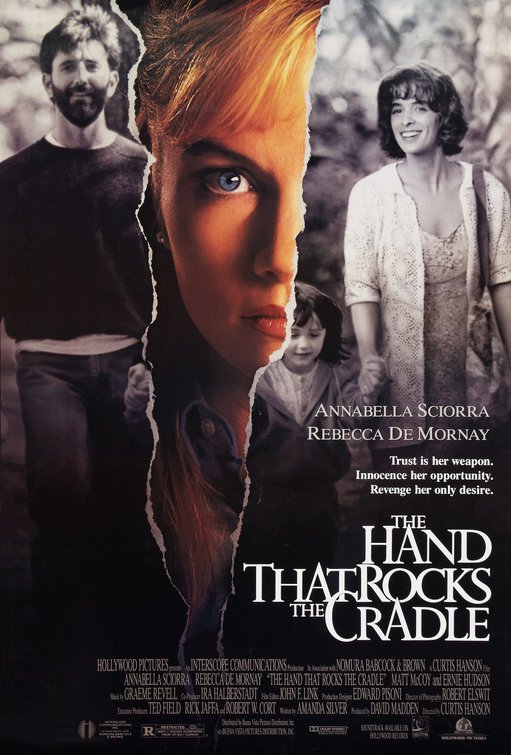
The soft lullaby, the gentle rocking, the image of a nurturing hand guiding a child – these are symbols of ultimate safety and unconditional love. But what happens when that hand becomes a fist, clutching a weapon of psychological terror, its movements driven by a chilling thirst for revenge? This is the unsettling premise at the heart of The Hand That Rocks The Cradle, a 1992 psychological thriller that continues to grip audiences decades later, solidifying its place in discussions around Enduring Themes and Psychological Relevance of The Hand That Rocks The Cradle.
From its opening moments, the film taps into primal fears: the violation of trust, the sanctity of home, and the terrifying realization that evil can wear the most innocent of disguises. It’s a masterclass in slow-burn dread, demonstrating how a seemingly perfect stranger can systematically dismantle a family's peace, not with overt violence, but with insidious psychological warfare.
At a Glance: Why The Hand That Rocks The Cradle Still Resonates
- Revenge as a Driving Force: Explores the destructive nature of unchecked vengeance, born from profound personal loss and trauma.
- Subverting Domesticity: Turns the safe haven of home and the trusted figure of a nanny into sources of immense terror.
- The Pressure of Motherhood: Highlights societal expectations on mothers and how these can be weaponized against them.
- Psychological Manipulation: A chilling portrayal of gaslighting, undermining trust, and isolating a victim from her support system.
- Vulnerability and Trust: A cautionary tale about the dangers of inviting strangers into your most intimate spaces.
- Timeless Societal Fears: Addresses anxieties about female professional ambition, marital fidelity, and the safety of children.
More Than Just a Thriller: Why It Still Haunts Us
Released in 1992, The Hand That Rocks The Cradle quickly became a box office phenomenon, raking in approximately $140 million worldwide against a modest budget. Directed by Curtis Hanson and written by Amanda Silver, the film resonated deeply with audiences, not just for its jump scares and suspense, but for its unnerving exploration of themes that remain acutely relevant. It tapped into a collective anxiety, holding the top spot at the U.S. box office for an impressive four consecutive weeks and earning Rebecca De Mornay widespread acclaim for her chilling portrayal of the villainous nanny, Peyton Flanders. This wasn't just another thriller; it was a societal mirror reflecting our deepest domestic fears.
The Psychological Architecture of Revenge: Peyton Flanders' Descent
At its core, The Hand That Rocks The Cradle is a meticulous study of revenge, meticulously crafted by a woman shattered by trauma. Mrs. Mott, soon to be known as Peyton Flanders, is not born a monster; she is forged in the crucible of devastating loss. After her husband, Dr. Victor Mott, is exposed as a sexual predator and takes his own life to avoid arrest, Mrs. Mott loses everything – her husband, her assets, and crucially, her unborn child, followed by an emergency hysterectomy that forever robs her of the chance to be a mother. In her distorted reality, Claire Bartel, the woman who reported her husband, becomes the sole architect of her suffering.
Peyton's revenge isn't a spontaneous act of violence; it's a calculated, insidious campaign designed to mirror her own losses. She seeks to dismantle Claire's perfect life piece by piece, stripping her of her children, her husband, her reputation, and ultimately, her sanity. This psychological depth elevates the film beyond a simple slasher flick, presenting a character driven by a profound, if twisted, sense of justice. Her actions are extreme, but her initial pain is undeniably human, making her a terrifyingly relatable antagonist whose motives, however warped, are understandable on a visceral level.
Subverting the Domestic Ideal: When the Home Becomes a Cage
The film cleverly weaponizes the most cherished symbols of domestic comfort and safety: the beautiful home, the loving family, and the trusted nanny. The Bartel residence, with its warm lighting and cozy interiors, initially represents an idyllic suburban life. However, once Peyton infiltrates this sanctuary, it slowly transforms into a psychological cage for Claire.
The figure of the nanny, traditionally a benevolent caregiver who provides peace of mind for busy parents, is horrifically twisted. Peyton Flanders embodies the "stranger in the house" trope with chilling precision. She gains entry through trust, her seemingly impeccable credentials and gentle demeanor masking a vengeful agenda. This subversion of the nanny archetype plays on a deep-seated fear: the vulnerability of children and the absolute trust parents place in those who care for them. The audience watches, helpless, as Peyton secretly breastfeeds Claire's infant son, Joey, making him reject his own mother's milk, a grotesque act of biological and emotional theft. She subtly manipulates daughter Emma, turning her against Claire and sowing seeds of doubt within the family unit. The very elements meant to support and nurture the family become instruments of its destruction, making the Bartel home feel less like a haven and more like a booby-trapped prison.
The Weight of Motherhood: Perfection, Pressure, and Paranoia
The Hand That Rocks The Cradle brilliantly exploits the societal pressures and anxieties surrounding motherhood. Claire Bartel is introduced as a seemingly "perfect" woman: a loving wife, a doting mother to Emma, and expecting her second child. Yet, she is also a victim of a horrific sexual assault, a trauma that impacts her psychological well-being. The film subtly highlights her vulnerabilities as a new mother – the exhaustion, the hormonal shifts, and the immense pressure to be "good enough."
Peyton capitalizes on this. She projects an image of the ideal caregiver, effortlessly soothing Joey, connecting with Emma, and managing the household. By contrasting Claire's perceived struggles with her own manufactured perfection, Peyton subtly gaslights Claire, making her question her own maternal instincts and sanity. When Joey rejects Claire's breast milk, for instance, Peyton's feigned sympathy only serves to amplify Claire's feelings of inadequacy. This manipulation is particularly cruel because it targets a mother's deepest fear: failing her children. The film forces us to confront the often-unspoken psychological toll of motherhood, making Claire’s eventual unraveling not just suspenseful, but deeply empathetic.
Master of Manipulation: The Art of Gaslighting and Control
Peyton Flanders is a virtuoso of psychological manipulation, her tactics a chilling textbook on gaslighting. She doesn't resort to overt threats until the very end; instead, she systematically chips away at Claire's reality, trust, and self-worth.
Her methods are insidious:
- Isolation: She subtly isolates Claire from her support system. By framing handyman Solomon, she removes a kind and observant presence. By planting Marlene’s cigarette lighter in Michael’s coat and engineering a public accusation, she effectively destroys Claire's friendship with Marlene, leading to Marlene's tragic death.
- Undermining Trust: Peyton constantly sows seeds of doubt about Claire’s judgment, especially with Michael. She manipulates situations to make Claire seem irrational or forgetful.
- Emotional Blackmail: She uses the children as pawns, knowing Claire's love for them is her greatest strength and greatest vulnerability. Her influence over Emma, for example, makes Claire question her bond with her daughter.
- Invisible Attacks: Many of Peyton's actions are secret – secretly breastfeeding Joey, emptying Claire's asthma inhalers, setting the greenhouse trap. This makes it impossible for Claire to pinpoint the source of her increasing distress, leading her (and others) to question her own sanity.
This sustained campaign of psychological warfare is arguably the most terrifying aspect of the film. It's a slow-motion car crash of the mind, where the victim is made to believe they are the problem, even as their world crumbles around them.
The Unseen Threat: Trust, Betrayal, and the "Stranger Within"
One of the most enduring themes of The Hand That Rocks The Cradle is the precarious nature of trust, particularly when it comes to inviting strangers into your home. The film opens with a profound violation of trust – a doctor, a figure of authority and care, sexually assaulting his patient. This initial betrayal sets the stage for Peyton’s subsequent infiltration, framing the entire narrative around the dangers of misplaced faith.
Claire Bartel, a survivor of one profound betrayal, unwittingly invites another, far more insidious one, into her life. Peyton is not a masked intruder lurking in the shadows; she is a smiling, seemingly competent woman welcomed into the heart of the family. This makes her all the more terrifying. The film plays on universal anxieties: How well do you truly know the people you trust with your most precious possessions – your home, your family, your children? It forces us to consider the hidden lives and secret motives of those we allow into our intimate spaces, making us question the thin veneer of civility that often covers deep-seated resentment and malice.
Working Mothers and Societal Judgments: A Timeless Undercurrent
While not the primary focus, the film subtly touches upon the "working mother's dilemma," a topic that remains incredibly relevant. Claire Bartel is not just a housewife; she's an architect with professional ambitions. Peyton subtly exploits this. When Michael’s career opportunity arises, and Claire is momentarily distracted, it creates a small opening for Peyton to further her agenda.
In the early 90s, and even today, women balancing careers and family often faced intense scrutiny and guilt. Peyton, the "perfect" stay-at-home nanny, implicitly critiques Claire's perceived divided loyalties. This subtext adds another layer to Claire's vulnerability, tapping into real-world pressures faced by countless women striving to "have it all." The film doesn't offer solutions, but it powerfully depicts how these societal expectations can be weaponized in moments of vulnerability.
The Problematic Portrayal of Solomon: A Critical Lens
It's important to approach The Hand That Rocks The Cradle with a critical eye regarding certain portrayals. The character of Solomon, the Bartel family's intellectually disabled handyman, has drawn commentary over the years. While he ultimately proves to be a kind-hearted and loyal protector, his initial characterization and the way Peyton frames him as a pedophile touch upon a problematic trope: associating intellectual disability with vulnerability to manipulation or, worse, with malevolence.
However, the film does pivot, showcasing Solomon's innate goodness and his quiet, unwavering dedication to the Bartel children. He sees Peyton’s malevolence when others cannot, and his heroic intervention in the climax is crucial for the family's survival. This complex portrayal, while rooted in some potentially problematic stereotypes, ultimately gives him a redemptive arc as a silent guardian.
Why It Endures: Cultural Legacy and Remakes
The Hand That Rocks The Cradle wasn't just a box office hit; it cemented its place in pop culture, becoming a touchstone for the "nanny from hell" trope. It earned accolades, including MTV Movie Awards for Rebecca De Mornay as Best Villain, and continues to be referenced in discussions about psychological thrillers. It even garnered a cult following, appearing on lists like Bravo's "30 Even Scarier Movie Moments."
The enduring themes of trust, betrayal, and the domestic nightmare resonate across generations, which is precisely why the story has seen and continues to see adaptations. A Bollywood remake, Khal-Naaikaa, arrived in 1993, and after a 2014 American remake attempt didn't move forward, a new American remake was announced for 2025. Starring Maika Monroe and directed by Michelle Garza Cervera, this new version, available directly to streaming on Hulu, signals the continued power of this narrative to captivate and terrify new audiences. For those curious about the talent bringing this classic story to a new generation, you might want to look into The Hand That Rocks Cradle Cast for the upcoming film. Its lasting appeal speaks to the universality of its fears: that our homes aren’t always safe, and the people we trust can sometimes be the most dangerous.
Beyond the Scream: Lessons in Psychological Resilience
So, what can we take away from this chilling tale beyond a heightened sense of paranoia about babysitters? The Hand That Rocks The Cradle serves as a powerful, albeit extreme, lesson in psychological resilience and the importance of trusting your instincts.
- Recognize the Red Flags: Peyton’s manipulation starts subtly. While in real life, such calculated villainy is rare, the film highlights the importance of paying attention to inconsistencies, subtle shifts in behavior, and the feeling that something "isn't quite right."
- Communicate Openly: Claire's struggle is exacerbated by her initial isolation. The film underscores the value of open communication with your partner, friends, and family, especially when you feel targeted or gaslighted.
- Trust Your Gut: Despite everyone else dismissing her concerns, Claire’s intuition eventually leads her to uncover Peyton’s true identity. The film is a powerful reminder to never dismiss your gut feelings, especially when it comes to the safety of your family.
- The Power of Self-Preservation: Claire, despite being emotionally and physically battered, finds the strength to fight back, ultimately protecting her children. Her journey from victim to survivor is a testament to the fierce protective instincts of a mother and the human capacity for resilience in the face of overwhelming adversity.
Ultimately, The Hand That Rocks The Cradle remains a chillingly effective psychological thriller because it taps into fears that are deeply ingrained in the human psyche. It reminds us that sometimes, the greatest monsters don't hide under the bed but walk through the front door, wearing a friendly smile, ready to rock your world to its very foundations.